

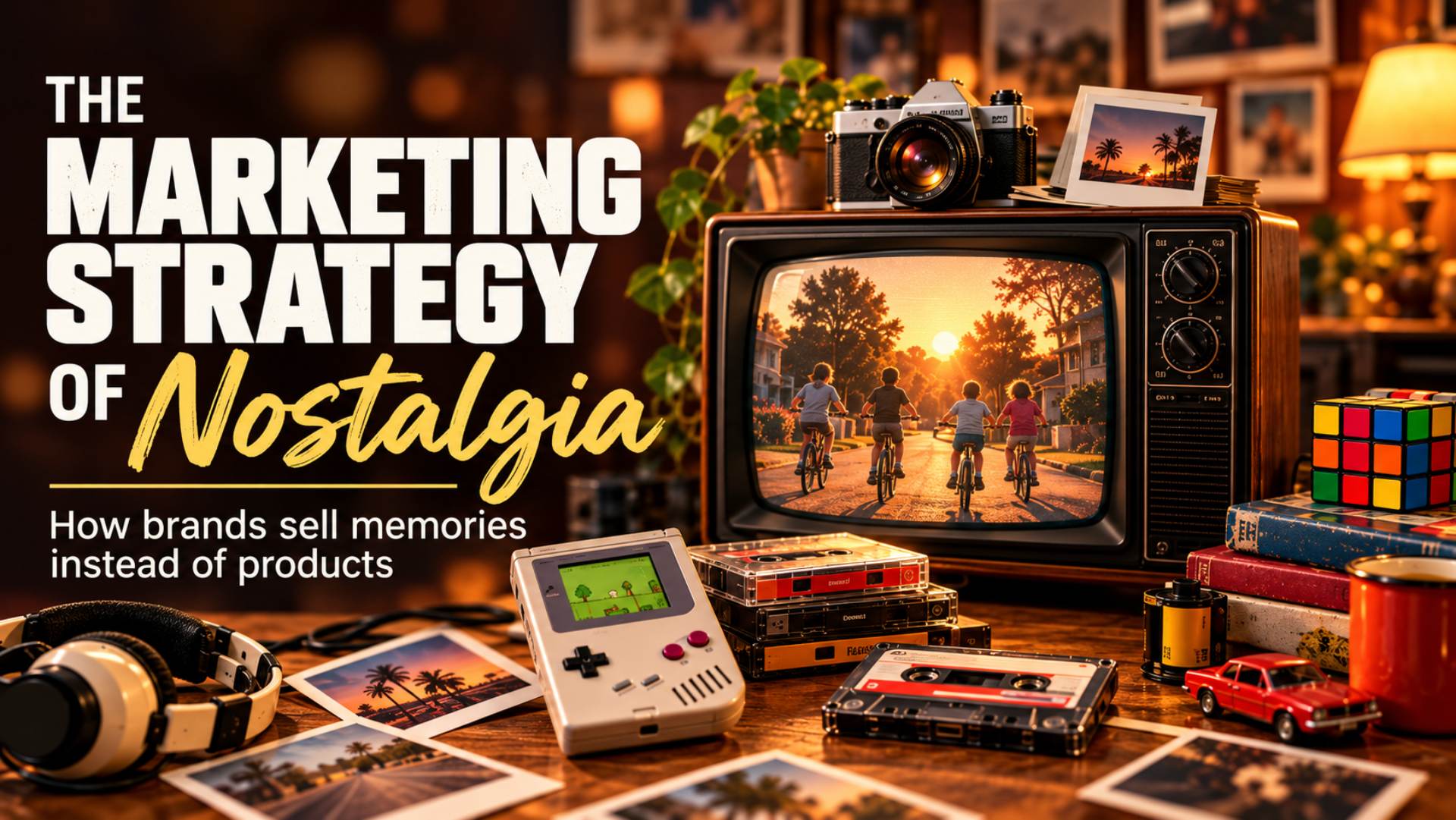
Retro logos, limited-edition throwback packaging, synthwave ad campaigns, reissued sneakers and mini versions of classic game consoles. Look closely at modern marketing and you will find the 1980s everywhere.
This is not a coincidence. Nostalgia is one of the most reliable emotional tools available to marketers, and the ’80s, with their bold visual identity and pop culture, are a particularly rich source of material.
But nostalgia is easy to get wrong. Done poorly, it feels like a lazy gimmick or a brand that has run out of ideas. This guide explains the psychology behind nostalgia marketing, why 80s Marketing Trends keep coming back, the main ways brands use them, and how to make nostalgia feel fresh, relevant and genuinely effective.
What Is Nostalgia Marketing?
Nostalgia marketing uses familiar elements from the past, such as design styles, products, music, characters or cultural references, to create a positive emotional connection with an audience today.
It can take many forms:
- Revived products: Bringing back a discontinued flavor, toy, sneaker or gadget.
- Retro branding: Temporarily using a vintage logo, packaging design or color scheme.
- Themed campaigns: Ads, social content or events built around a specific era’s look and feel.
- Pop culture partnerships: Collaborating with films, shows or franchises connected to the past.
- Brand heritage storytelling: Celebrating a company’s own history and long-standing customers.
The common thread is emotion. Nostalgia in Advertising does not just remind people of the past; it reminds them how the past made them feel.
The Psychology: Why Nostalgia Works
Nostalgia was once treated as a kind of homesickness or even an illness. Modern psychology sees it very differently. Researchers, including a well-known group at the University of Southampton in the UK, have studied nostalgia extensively and generally describe it as a common, mostly positive emotion.
Understanding Why Brands Use Nostalgia starts with the emotional and psychological effects it can create in marketing:
It creates warmth and comfort
Nostalgic memories tend to center on meaningful moments, often with family and friends. Research has linked nostalgia with feelings of social connection and a sense that life is meaningful. When a brand triggers those feelings, some of that warmth can attach to the brand itself.
It offers reassurance in uncertain times
People often turn to nostalgia when they feel stressed, lonely or uncertain. Familiar sights and sounds offer a sense of stability, which may help explain why nostalgic campaigns often resonate during difficult periods.
It builds trust through familiarity
Things we already know feel safer. A familiar logo, jingle or product can lower resistance to a message, because it does not feel like a stranger selling to us.
It can make people more open to spending
Some consumer research suggests that feeling nostalgic can make people less focused on money and more willing to spend. Findings like these are context-dependent, so treat them as a signal rather than a guarantee.
It sparks sharing and conversation
Nostalgia invites people to tell their own stories: “I had one of those!” That makes nostalgic content naturally social, which is valuable for engagement on any platform.
Why Brands Keep Returning to the ’80s
Every decade gets its nostalgic revival, but the 1980s have proven unusually durable. A few reasons stand out.
- A powerful audience connection. Many people who were children or teenagers in the ’80s are now established adults and decision-makers, with strong memories of the decade’s toys, music, films and brands.
- Appeal to younger generations too. Many younger consumers who never lived through the decade enjoy ’80s style as a fun, colorful aesthetic. This kind of borrowed nostalgia means a single campaign can reach several age groups.
- An instantly recognizable visual language. Neon colors, chrome lettering, grids, cassette tapes and arcade graphics signal “the ’80s” in a split second, which is ideal for crowded social feeds.
- The birth of modern pop culture. Music videos, blockbuster franchises, home video games and personal technology all took off in the ’80s, creating a large pool of shared cultural references.
- Pop culture keeps reviving it. Films, series and music that revisit the decade keep ’80s aesthetics in the public eye, giving brands a ready-made cultural moment to join.
This Retro Marketing Appeal comes from an era that feels familiar to older audiences and fresh to younger ones, a rare combination in marketing.
Seven Ways Brands Use ’80s Nostalgia
1. Limited-edition product revivals
Brands Reviving the ’80s often bring back discontinued products for a short time to create excitement and urgency. Scarcity encourages fast purchases and plenty of social sharing.
2. Retro packaging and logos
Retro Branding Strategies can include temporarily switching to vintage packaging or an older logo, refreshing a familiar product on the shelf without changing what is inside.
3. Pop culture collaborations
Partnering with films, series or music with ’80s connections lets brands tap into an existing fan base and a cultural moment.
4. Retro-styled content and ads
1980s-Inspired Marketing often uses synthwave visuals, VHS effects, film grain and chiptune music to give social posts and video ads instant personality. AI tools now make it easy to create retro photos, posters and videos at scale.
5. Brand heritage storytelling
Companies with real history can share archive photos, old ads and stories from long-serving customers. Authentic heritage builds trust in a way borrowed nostalgia cannot.
6. Experiential events and pop-ups
Arcade nights, roller discos and retro pop-up shops turn nostalgia into a shared, physical experience that people want to photograph and share.
7. User-generated content
Inviting customers to share their own ’80s memories, photos or AI-restyled portraits creates participation and gives your brand a stream of authentic content.
How to Use Nostalgia Without Seeming Gimmicky or Stale
The difference between successful Nostalgic Brand Campaigns and those that fall flat usually comes down to relevance and execution.
Six principles for fresh nostalgia
- Connect it to your brand. Nostalgia works best when there is a real link, such as your product’s history, your audience’s memories or a clear creative idea. Random retro styling feels forced.
- Blend past and present. Combine a vintage look with modern benefits, values or technology. The past should frame the message, not replace it.
- Know your audience. Decide whether you are speaking to people who remember the era, younger fans of the aesthetic, or both, and choose references accordingly.
- Be specific and authentic. Accurate details, from typefaces to color palettes, show respect for the era. Generic “retro” visuals look cheap.
- Keep it time-limited. Short, well-timed campaigns feel special. Constant nostalgia can make a brand look stuck in the past.
- Respect intellectual property. Use original designs or properly licensed characters, music and logos. Borrowing without permission creates legal and reputational risk.
Nostalgia marketing dos and don’ts
| Do | Don’t |
|---|---|
| Tie the theme to your product, story or audience | Add retro visuals with no clear reason |
| Pair nostalgic style with a modern message | Rely on nostalgia as the whole idea |
| Use accurate, well-researched details | Mix eras or use generic “old-looking” filters |
| Invite customers to share their own memories | Talk only about yourself |
| Run limited, well-timed campaigns | Repeat the same retro theme indefinitely |
| Use original or licensed creative assets | Copy famous characters, songs or logos |
How to Measure a Nostalgia Campaign
Emotional campaigns still need clear goals. Decide before launch what success looks like, then track the metrics that match.
- Engagement: Comments, shares, saves and replies, especially people sharing their own memories.
- Reach and awareness: Impressions, branded search volume and mentions across social media and the press.
- Sales impact: Revenue and units sold during the campaign compared with a normal period, particularly for limited editions.
- Audience growth: New followers, email sign-ups and first-time customers, broken down by age group if possible.
- Brand sentiment: Whether conversations about your brand become more positive, measured through social listening or surveys.
- Search and AI visibility: Whether your brand appears more often in search results and AI-generated answers for related topics.
A nostalgia campaign that earns attention but no lasting benefit is entertainment. One that grows awareness, sales or loyalty is marketing.
Frequently Asked Questions
What is nostalgia marketing?
Nostalgia marketing uses familiar elements from the past, such as retro designs, revived products, music or cultural references, to create positive emotions and a stronger connection with customers.
Why does nostalgia marketing work?
Nostalgia is associated with warmth, comfort and social connection. Familiar references can build trust, reduce resistance to a message and encourage people to share their own memories, which boosts engagement.
Why is the 1980s so popular in marketing?
The ’80s have a distinctive visual style, a huge library of pop culture references and broad appeal. They connect with adults who grew up in the decade and with younger audiences who enjoy the aesthetic.
Can nostalgia marketing work for new brands?
Yes, though it works differently. New brands cannot rely on their own history, so they can use era-inspired design, cultural themes or partnerships. The key is a clear creative reason for the theme.
What are the risks of nostalgia marketing?
The main risks are seeming unoriginal, alienating audiences who do not share the reference, overusing the theme, and infringing on copyrighted or trademarked material.
Final Thoughts: Look Back to Move Forward
Nostalgia works because it taps into something deeply human: the comfort of familiar memories and the joy of sharing them. The 1980s, with their bold style and rich pop culture, give brands an especially powerful palette to work with.
The brands that succeed with Vintage-Inspired Brand Marketing treat nostalgia as a bridge, not a destination. They connect the past to something relevant today, execute with care and authenticity, and keep campaigns fresh by knowing when to move on.
Creative campaigns earn attention, but sustained growth depends on being found when customers search. At Megrisoft, we help brands turn creative ideas into lasting visibility through SEO, content strategy and AI search optimization. If you want your next campaign to keep working long after the buzz fades, get in touch with our team.